
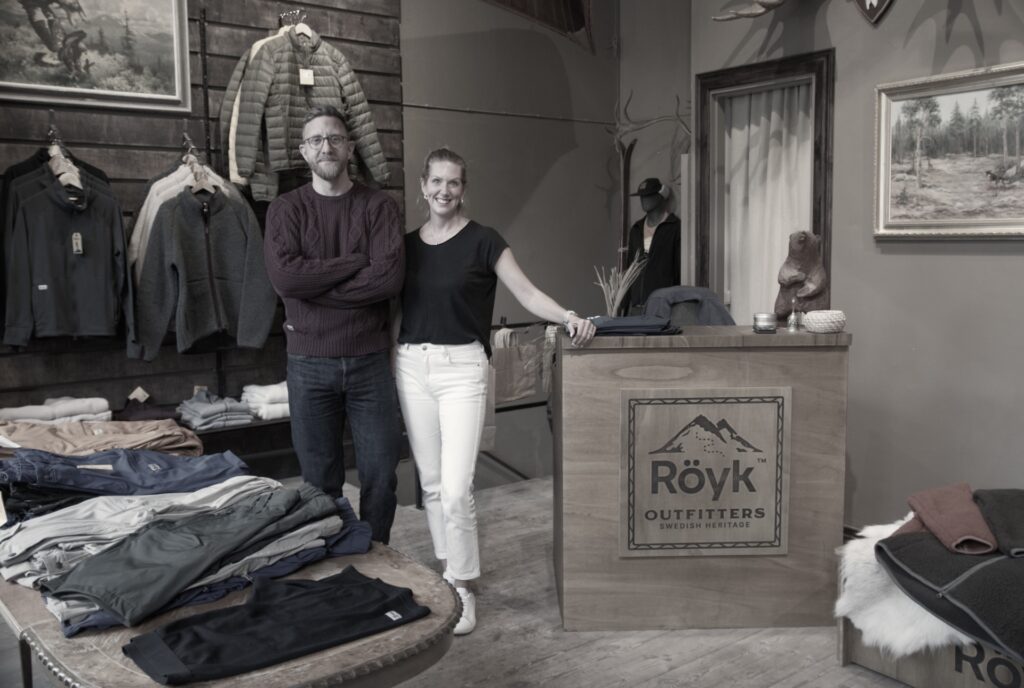
Röyk grew – yet the company was seen as high risk
Outdoor brand Röyk faced the challenge of rapidly securing capital in order to continue growing. With the help of Invoier's dynamic risk assessment model, the company gained access to liquidity within 24 hours and was able to continue financing its growth.
Despite stable growth and repeat customers, Röyk faced major challenges when it came to accessing capital on reasonable terms.
– We knew our business was strong, but it didn't matter. The system saw us as high risk and we were made to pay accordingly, says Isabelle Persson, co-founder of Röyk.
According to Fredrik Mistander, co-founder of Invoier, this is a common problem for the SME sector throughout Europe.
– Many believe that the SME sector's biggest challenge is the lack of capital, but what we see is that it is often a matter of risk being assessed incorrectly, says Fredrik Mistander.
Many credit assessments are still based on historical financial statements and static models that do not reflect companies' real situation in the present.
– We see time and time again how strong companies are classified as risky – not because they are, but because the systems do not understand their data. Risk is dynamic, not static, and assessments must be too, says Fredrik Mistander.
The problem becomes particularly clear for growing companies: the larger the orders and the longer the payment terms, the more capital they have to tie up themselves to finance their growth.
Mats Holmfeldt, CEO of Invoier, sees Röyk's situation as part of a wider challenge regarding how capital is allocated to growing companies.
– We started by solving a concrete financing problem, but what we are building is fundamentally about something bigger – using data and better risk assessment to connect growing companies with capital in a more efficient way, he says.
”Crucial for growth”
As Röyk grew and order values increased, it became increasingly important to bring in capital quickly in order to keep investing. By selling its invoices via Invoier, the company gained access to liquidity within 24 hours. That has been crucial for the business, says Isabelle Persson:
– As a small company, we are not in a position to be out of pocket for several weeks after delivery, as we already have major costs before we even send the invoice. Without this solution, we would most likely have had to revert to running a hobby business.
Invoier's model uses continuous transaction data and automated analysis, which allows the risk profile to be updated significantly more often than in traditional credit models.
– It gives a more accurate picture of risk and leads to faster financing, more correct pricing and better access to capital for companies like Röyk, says Fredrik Mistander.
He points out the importance of the assessment reflecting the company's current situation:
– When the risk profile can be updated with current transaction data, better conditions are created for both pricing and financing. This is particularly important for growing companies where historical figures can quickly become an incomplete picture of the business.